Update, 31 July 2026: Datagrid has since contracted phase one of the Tasman Ring Network, 2,300km from Invercargill to Torquay in Victoria, with service targeted for 2029. Read the contract coverage.
At a glance
Mercury NZ has paid US$30 million (NZ$53 million) for a 12.7% stake in Datagrid, its first outside shareholder since BW Digital exited.
Mercury chief executive Stewart Hamilton joins the Datagrid board, deepening a tie that began with a 140MW power purchase option in March 2026.
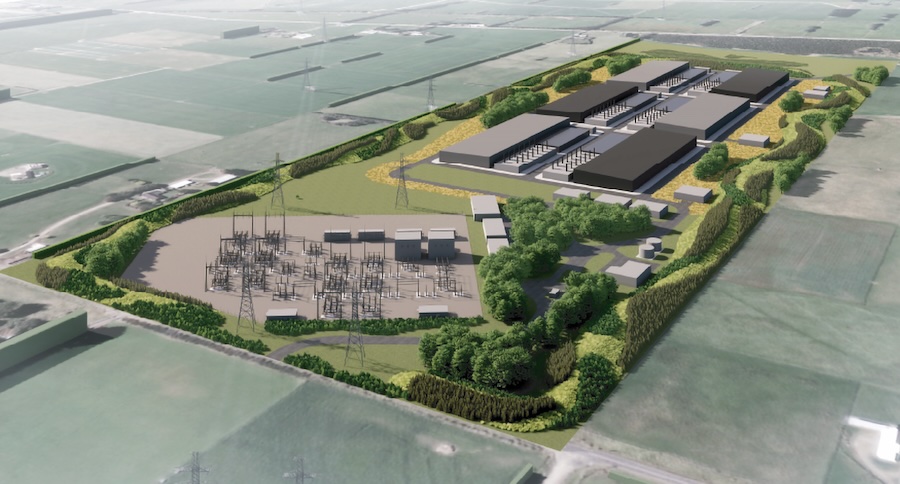
The site has a 360MW grid connection to the almost fully renewable South Island grid; the data centre itself was initially designed at 280MW, with the final load to be confirmed as design work completes.
The build is estimated at NZ$3.4 billion to NZ$5.1 billion, and Datagrid has announced no debt facility ahead of a final investment decision due later in 2026.
Water consents granted in March allow about 220 million litres a year, and a Water New Zealand engineer says the rules do not fit hyperscale demand.
Mercury adds equity to a supply deal
Mercury NZ has bought its way into the data centre it had agreed to power. The majority Crown-owned generator has paid US$30 million, about NZ$53 million, for a 12.7% stake in Datagrid New Zealand, the developer of the AI campus planned for Makarewa, north of Invercargill. Mercury chief executive Stewart Hamilton joins the Datagrid board. The company says the investment is funded from existing facilities and structured to preserve balance sheet flexibility.
It also makes Mercury the first outside shareholder in Datagrid since BW Digital left. Datagrid was owned by a Galasso family trust and BW Digital until a November 2025 Overseas Investment Office update recorded BW's stake passing to a Galasso entity. The generator now holds a minority position alongside the founder, and its wholesale chief sits inside the company as it approaches a final investment decision.
Mercury already supplied the project on paper. It signed a 140MW power purchase option with Datagrid in March 2026, an option covering half the 280MW initial design, short of firm supply. The equity takes the position further, tying the generator to the kind of long-duration demand it says underpins new generation.
Mercury says long-duration load from users like Datagrid gives it the revenue certainty to fund new renewables. Hamilton called the stake a disciplined investment in a strategically important opportunity, and wholesale general manager Tim Thompson described it as staged, with governance and downside protection. For Datagrid, founder and chair Rémi Galasso put it down to speed, saying the round lets the company move decisively, begin horizontal construction on the site, and treat the partnership as a strategic step rather than an electricity arrangement.
Mercury's move | Date | Instrument | What it locks in |
|---|---|---|---|
Power supply | March 2026 | 140MW power purchase option | An option over half the campus, short of firm supply |
Ownership | July 2026 | US$30m for 12.7%, plus a board seat | A minority stake and governance in the developer |
Source: Datagrid and Mercury disclosures, July 2026.
US$30m equity, no debt facility yet
Published estimates of the Makarewa build run from about NZ$3.4 billion to NZ$5.1 billion depending on scope, against which Mercury's US$30 million is a development-stage cheque. Datagrid has announced no debt facility, and as recently as late June, Galasso told the NZ Herald the financing was "still working on it." The Mercury investment values Datagrid the company at roughly NZ$420 million and helps fund the development phase, while the debt that pays for six data halls is the gate the project still has to pass.
The site has a 360MW grid connection, and the initial data centre design was 280MW. Galasso says the final data centre load will be confirmed once design optimisation is complete. At 280MW the campus would be one of the largest new sources of electricity demand in New Zealand, the kind of long-duration load Mercury says underpins investment in new generation. The pitch, set out in our explainer on New Zealand's data centre build-out and tracked by our Australian sister publication Certified Strategic, is low-emissions compute run on South Island hydro and wind and sold offshore. That export still depends on the Tasman Ring subsea cable, which Chorus signed for in 2024 and withdrew from in August 2025, leaving Datagrid to carry a 6,000km international link that MBIE calls essential and Chorus said would not be in service before 2030.
220 million litres a year, and an engineer's warning
The consent numbers behind the campus have been public since March. Environment Southland's water permit, issued on 11 March 2026, allows an evaporative cooling take of 7 litres a second, 604,800 litres a day and about 220 million litres a year, drawn from the same catchment as local farms and the regionally significant Taylor Road Wetland. This month those figures drew a renewed warning from Water New Zealand engineer Evan Vaughters, who said the consent lacks the monitoring needed to track long-term effects and argued the Resource Management Act is not built for hyperscale data centres.
Datagrid says the consent ceiling and its actual draw are two different numbers. Galasso says the design will use Southland's cool climate, around 10°C on annual average, to minimise water use, with detailed volumes to be published once design work is finalised, and that the campus will target the best water usage effectiveness in the region. Ngāi Tahu was notified and approved the consent, and Datagrid has committed to a joint working group, Te Rewa, with the region's Papatipu Rūnaka. The social licence is not settled: a change.org petition against the campus closed with more than 26,000 signatures, and the Ipsos AI Monitor 2025 found 66% of New Zealanders say AI makes them nervous, second only to Australia.
What to watch
Mercury's equity funds Datagrid's development phase; the debt that builds the campus is still unsigned. The build still needs a debt facility, a firm conversion of the 140MW option, a Transpower works agreement, and a route to market for compute that only the Tasman Ring provides. Hamilton now sits on the board where each of those is decided, and the final investment decision is expected before the end of 2026.