At a glance
National, ACT and NZ First hold 67 of 131 seats on the preliminary count of the 7 November election, one more than the 66 needed to govern.
About 399,365 special votes are still to be counted, and the Electoral Commission releases the official result on 27 November.
National, Labour, the Greens and the Opportunity Party each want large AI data centres to secure their own power supply.
BusinessDesk reported before the vote that the Greens' pause on consents for hyperscale data centres is the policy least likely to be implemented.
Nicola Willis, the minister who holds the government's data centre principles, is out of Parliament on the preliminary figures.
New Zealand's National-led coalition is on track to stay in government after the 7 November general election, on the Electoral Commission's preliminary count. National, ACT and New Zealand First hold 67 of the 131 seats, one more than the 66 needed to govern, RNZ reported. The next government inherits the draft data centre principles ministers have held since July.
About 399,365 special votes, roughly one vote in seven, are still to be checked and counted. They include 96,947 votes cast from overseas or by dictation. RNZ reported that special votes have historically tended to favour the left. Labour, the Greens, Te Pāti Māori and Opportunity hold 64 seats between them.
Coalition talks start when the official result is released on 27 November, Prime Minister Christopher Luxon said, according to the NZ Herald. Turnout was an estimated 74.6 per cent.
Four of the seven parties in the new Parliament, holding 101 of its 131 seats on the preliminary count, want large AI data centres to secure their own power supply. Three of them ask for new generation, and they differ on how that rule works and on how fast new projects get consents.
National wants AI data centres to add firmed power
National's Electrify NZ 2.0 plan, released on 2 October 2026, promises to "require AI data centres to bring their own new, firmed power, so new digital investment adds to the grid and creates jobs instead of pushing up prices." Firmed power is supply backed up for when the wind drops or the sun goes down.
The same plan lets developers, major users and investors build transmission lines and recover the cost from those who use them. ACT backs private transmission lines too, in its 18 September electricity policy. Under that policy, the generators and consumers using a new line would agree to pay for it, rather than every power user.
New Zealand First gave its view to the Science Media Centre in September. It promises "no domestic and industrial energy displacement from hyper-scale datacentres." It also backs a rule that public agencies store New Zealanders' personal information on servers inside New Zealand.
Labour wants data centres to pay their own connection costs
The AI policy Labour published on 9 September sets four conditions, which we covered at the time. Data centres must "secure their own renewable energy supply, pay for their own connection costs, reduce electricity demand during peak stress periods, and use water efficiently." A moratorium is not "the right approach," Labour's Reuben Davidson told interest.co.nz, as we reported on 3 November.
The Greens' October policy calls for "a pause on consenting new hyperscale data centres until the regulatory framework is established." New AI facilities must also provide new renewable generation to cover their full energy use. Co-leader Chlöe Swarbrick has put the hyperscale line at facilities using more than 50MW of power, as we reported in October.
BusinessDesk reported on 3 November that the Greens' promise "is the least likely of data centre policies to be implemented after the election."
Opportunity enters Parliament with seven list seats
The Opportunity Party won seven list seats with 5.96 per cent of the party vote. Its Digital Future policy asks national planning rules to require AI data centres to "underwrite their own new clean energy generation, pay the full cost of grid connections, meet efficiency mandates and curtail power use during peak grid events." We covered the plan on 3 November.
Luxon said on 8 November that National does not need Opportunity to form a government, the Herald reported. He named AI and infrastructure among the issues where the two parties could work together. Opportunity leader Qiulae Wong has said she would call the party with the most seats first.
Opportunity "is in, but is not holding the balance of power," BusinessDesk columnist Pattrick Smellie wrote on 9 November.
Te Pāti Māori won five electorate seats. Its data policy proposes to protect Māori data and knowledge through data sovereignty, law firm Simpson Grierson wrote in its 4 November summary of party policies, which records positions as at 30 October.
Nicola Willis is out of Parliament on the preliminary count
National won 42 electorates on 29.21 per cent of the party vote, which leaves it with no list seats. Senior MPs including Nicola Willis and Chris Bishop are out of Parliament on the preliminary figures, the Herald reported.
Willis was handed the government's draft data centre principles as Economic Growth Minister on 27 July, and has held them with the Department of the Prime Minister and Cabinet since. She has stayed in her role for now, according to Stuff.
Bishop could return if he wins Hutt South once special votes are counted. Ginny Andersen of Labour leads him there by 889 votes.
Wynyard Quarter and Stratford face the next government's rules
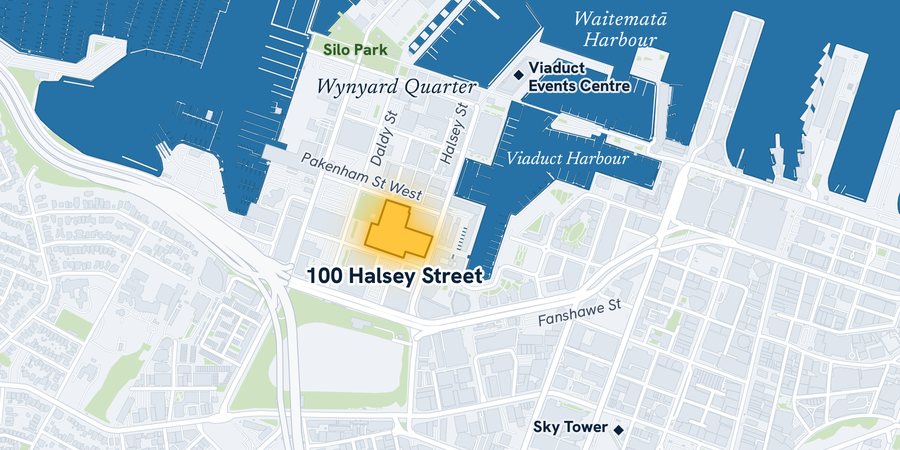
The rules matter most for projects already in the planning system. The Minister for Infrastructure referred 100 Halsey Street at Wynyard Quarter to the fast-track on 27 June, the fast-track website says. That minister is Chris Bishop, who holds the infrastructure portfolio. The developer lodged the full application on 22 October. The data centre option starts at about 35MW of IT load and grows to 88MW, we reported on 5 November.
Datagrid began construction at Makarewa in Southland on 18 August. Its consents cover a 280MW first stage, targeted for 2028. Contact Energy and CDC were preparing a consent application for their 250MW Stratford proposal in September.
Transpower's forward pipeline, updated on 8 November, lists 14 data centre connection projects. Four are in delivery, all in Auckland. The earliest is a 30MW connection for TenPeaks and Spark at Takanini, due on 22 March 2027.
Project | Developer | Size | Status |
|---|---|---|---|
100 Halsey Street, Wynyard Quarter | NZ CRE 100 Halsey Limited | About 35MW IT load at first, 88MW full | Fast-track application lodged 22 October |
Makarewa, Southland | Datagrid | 280MW first stage | Under construction since 18 August, first stage targeted for 2028 |
Stratford, Taranaki | Contact Energy and CDC | 250MW | Consent application in preparation (September) |
Takanini, Auckland | TenPeaks and Spark | 30MW connection | In delivery, due 22 March 2027 |
Source: fast-track website (100 Halsey Street project page, 5 November 2026); Transpower load pipeline, 8 November 2026; company statements as reported in our earlier articles. Figures are as each source states them and are not all measured on the same basis.
We expect an own-power rule for large AI data centres whichever bloc forms the government, because National, Labour, the Greens and Opportunity each propose one. BusinessDesk reported on 3 November that some form of requirement is more likely "regardless of which party forms the next Government."
A Ministry of Business, Innovation and Employment briefing of 2 July took a lighter view. It found projected data centre growth "can likely be accommodated within existing market and regulatory frameworks." Graeme Muller of Tech New Zealand told BusinessDesk the parties' policies suggest the industry does "what is already legally required for them to do."
What to watch
Official result, 27 November: the Electoral Commission releases the official result, including the close Hutt South and Wairarapa seats. Luxon has said coalition talks start then.
New Parliament, by 14 January 2027: MPs must meet by this date at the latest, according to an analysis by Massey University politics professor Richard Shaw, published by RNZ.
Wynyard Quarter fast-track: the 100 Halsey Street application documents are due on the fast-track website shortly, and the panel then has a default maximum of 90 working days to decide.
Datagrid: the company expects to commit to the Makarewa build before the end of 2026.