At a glance
- Datagrid's four Southland transformers will be built by Elsewedy Electric, a Cairo manufacturer with reported sales above US$5.7 billion a year and more than 34 factories.
- Lead times for high-capacity power transformers in the United States run as long as four years on PwC analysis; industry sources put prices up about 80 per cent in five years.
- Elsewedy Electric says it exports to more than 100 countries, and it plans US$2.1 billion of data centre campuses in Egypt with Gulf Data Hub under a memorandum of understanding.
- Hitachi Energy and Siemens are building new United States transformer plants; the Hitachi plant is due online in 2028.
- The Electricity Authority has logged 12 further prospective New Zealand data centre projects, and any that needs a new grid connection buys equipment from the same market.
Datagrid orders four transformers from Egypt's Elsewedy Electric
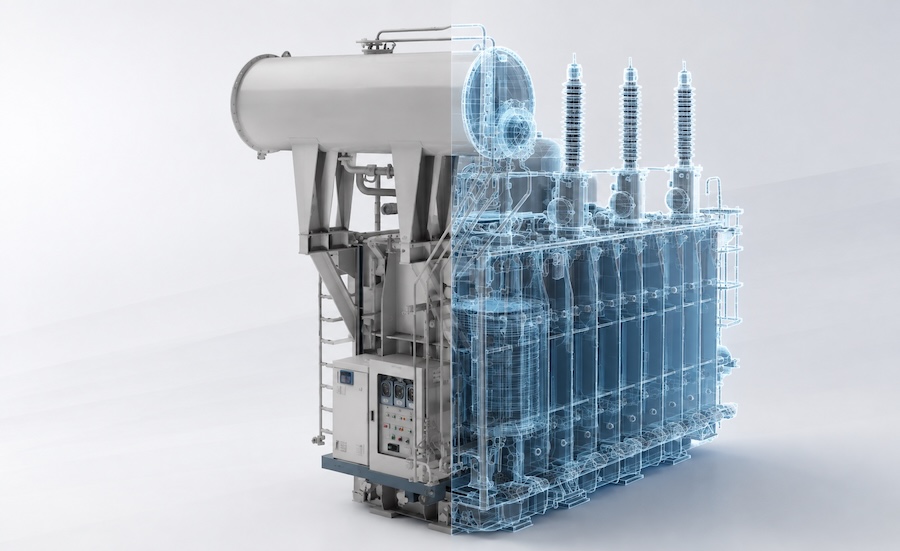
The four transformers behind Datagrid's Southland substation will be built by Elsewedy Electric, a Cairo firm founded in 1938 and still run by the founding family. Datagrid has paid Transpower in full and up front for the units, their bushings and other long-lead items, for a substation rated at 360MVA and targeted for commissioning in late 2027. Trade sources told NZ Herald technology editor Chris Keall the transformers could cost more than US$10 million each, and Datagrid founder and chief executive Rémi Galasso called securing the equipment "a major milestone".
Every data centre that needs a new transmission-level connection buys this class of equipment, and the market for it has tightened worldwide. Consultancy PwC puts United States lead times for high-capacity power transformers at up to four years, industry sources report prices up about 80 per cent in five years, and the manufacturer that took New Zealand's order sells more than US$5.7 billion of electrical equipment a year. The Makarewa substation taps the 220kV lines between the Manapōuri power station and Tiwai Point, feeding a 360MVA grid connection and a campus designed at 280MW for its first stage.
Elsewedy runs 34 plants and is building data centres of its own
First-half 2026 sales reached US$3.27 billion, up about 32 per cent, at a group listed on the Egyptian Exchange with Ahmed Elsewedy as president and chief executive. Its own account describes six divisions, with more than 34 production facilities across Africa and Asia and exports to more than 100 countries. Transformers sit alongside cables, electrical products and construction in the portfolio, and the transformer range runs from power units to distribution and dry-type models.
Elsewedy announced a US$500 million expansion into Saudi Arabia and Qatar in December 2025, including a power transformer plant in Dammam, and its data centre arm holds a memorandum of understanding with Dubai data centre operator Gulf Data Hub for three Egyptian campuses under a US$2.1 billion investment, starting at 192MW. Group chief operations and strategy officer Abdulrahman Elsewedy said of the Datagrid order: "Data centres are becoming the backbone of the digital economy, and meeting their growing energy needs will require trusted partners with both global scale and local commitment." The company says its global manufacturing network lets it meet rising international demand "with speed, reliability, and confidence".
PwC puts US transformer lead times at up to four years
Surging demand and shortages of grain-oriented electrical steel and copper have pushed United States lead times for high-capacity transformers to as long as four years, according to PwC analysts reported by pv magazine in May 2026. Industry experts in the same report put price rises at roughly 80 per cent over five years. A person close to the Datagrid deal told the Herald that procurement of transformers "has become highly competitive, often resulting in long lead times", and described pre-purchase agreements as a standard way for a customer to protect its schedule.
| Measure | Figure | Period |
|---|---|---|
| Lead time, high-capacity power transformers (US) | Up to four years | As at May 2026 |
| Price movement | About +80 per cent | Five years to 2026 |
| Generator step-up transformer demand | +274 per cent | 2019–2025 |
| Substation transformer demand | +116 per cent | 2019–2025 |
Source: PwC, Wood Mackenzie and industry figures reported by pv magazine, 11 May 2026.
Hitachi Energy has announced more than US$1 billion of investment in added capacity, and Siemens has lifted its commitment to a transformer factory in Charlotte, North Carolina, to US$421 million, both reported by pv magazine. Datagrid's substation is targeted for commissioning in late 2027; Hitachi Energy's new plant comes online in 2028.
The Electricity Authority has logged 12 more prospective projects
ETEL builds distribution transformers in Auckland, and its owner, lines company Unison, calls it New Zealand's largest transformer manufacturer. The transmission-class units a 220kV substation needs come from global manufacturers.
Twelve further prospective data centre projects sit with the Electricity Authority, details confidential, against an operating colocation market of about 208MW across 36 facilities. The 250MW campus Contact Energy and CDC Data Centres propose at Stratford starts from an existing grid connection, with "minor substation works required" on Contact's announcement. Datagrid ordered its transformers more than a year ahead of its late-2027 substation date.
Prime Minister Christopher Luxon rejected a consenting pause in July and directed officials to draft data centre investment principles, framed as a compact in which a builder contributes new generation, grid-stability investment and payment for transmission upgrades scaled to the size of the project. Finance Minister Nicola Willis has directed further work on measures to keep future data centres from lifting electricity prices, drawing on steps taken in Australia and other jurisdictions.
What to watch
The delivery schedule. Four transformers, bushings and long-lead items have to be manufactured, shipped and commissioned against the late-2027 substation target, with the campus's first stage targeting 2028.
The investment principles. The compact under drafting covers who pays for new generation and transmission upgrades. New Zealand votes on 7 November 2026.
The next order. Twelve prospective projects sit with the Electricity Authority, details confidential. The lead times quoted when the next of them buys transformers will show whether four years has reached New Zealand.